Feminist.com
The Vagina MonologuesFeminist.com is a feminist website whose board connected Eve Ensler’s campaign against violence against women with activists pursuing overlapping goals. Its contribution in the book is practical and consequential: a meeting helped bring V-Day into being, while later references place Feminist.com among the organizations receiving V-Day funding and among the supporters acknowledged in the book’s closing thanks.
The Board Meeting and V-Day’s Formation
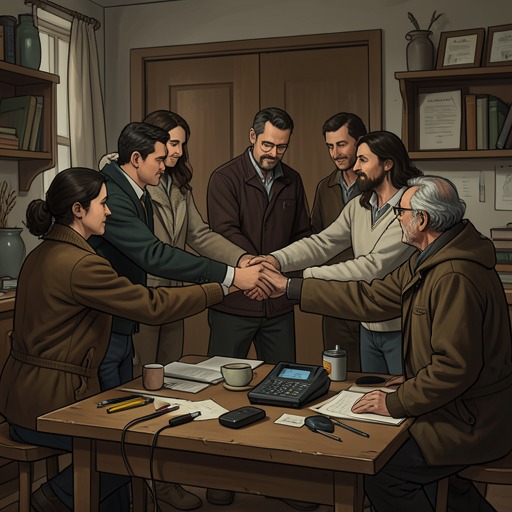
In her account as director of the V-Day College Initiative, Karen Obel describes having served on Feminist.com’s board of directors for just over a year before attending a board meeting to which Eve Ensler had been invited. Kathy Najimy had suggested the invitation because she believed Feminist.com’s goals overlapped with Ensler’s effort to stop violence against women. Obel recalls that the shared purpose became clear during the meeting: by its end, V-Day had been conceived.
That account gives Feminist.com a specific place in V-Day’s origins without presenting it as the sole founder or organizer. Its board meeting supplied a setting in which people already working toward related aims could recognize common ground and begin forming a new initiative. The movement’s emergence is therefore linked not just to an individual’s work, but also to the contact and collaboration made possible through the organization.
From Shared Aims to Collective Work
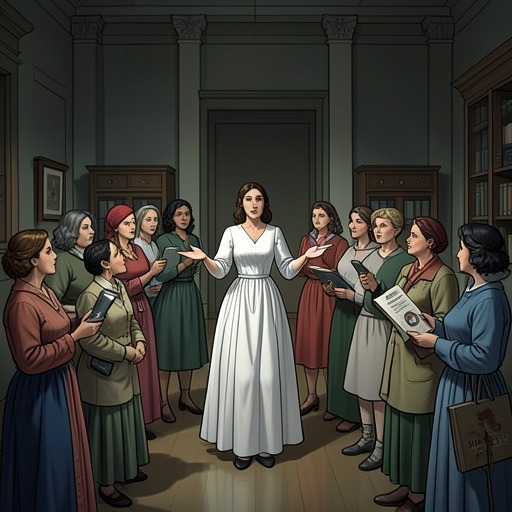
The book’s account of V-Day’s founding also describes a meeting with activist women, many associated with Feminist.com, after which V-Day was formed. The two accounts place Feminist.com within the early coalition: one emphasizes the board meeting and the convergence of goals, while the other identifies activist women from the organization among the people involved. Together, they establish the organization as a meeting point for collaborative action against violence toward women.
The distinction matters. Feminist.com appears as part of a network rather than as a substitute for V-Day itself. The organization’s relevance lies in helping connect participants and purposes; the resulting campaign then develops its own committees, events, and wider work. This origin story makes institutional relationships visible as part of how activism is built.
Funding and Continuing Acknowledgment
Feminist.com appears again in a list of groups granted funds through V-Day’s fundraising and merchandising. That listing places the website among grassroots and field organizations working to stop violence toward women. The book does not specify the amount or use of the grant, so its evidence supports a clear but limited conclusion: Feminist.com was among the organizations receiving support through V-Day’s funding activity.
The closing acknowledgments also thank Feminist.com alongside the V-Day Committee and other supporters. This later mention complements the account of the founding meeting: the organization is remembered both as part of the coalition in which V-Day took shape and as a continuing presence in the network surrounding the work. The book thus traces a modest but sustained role, from shared purpose at a board meeting to inclusion in the movement’s support and acknowledgment.